

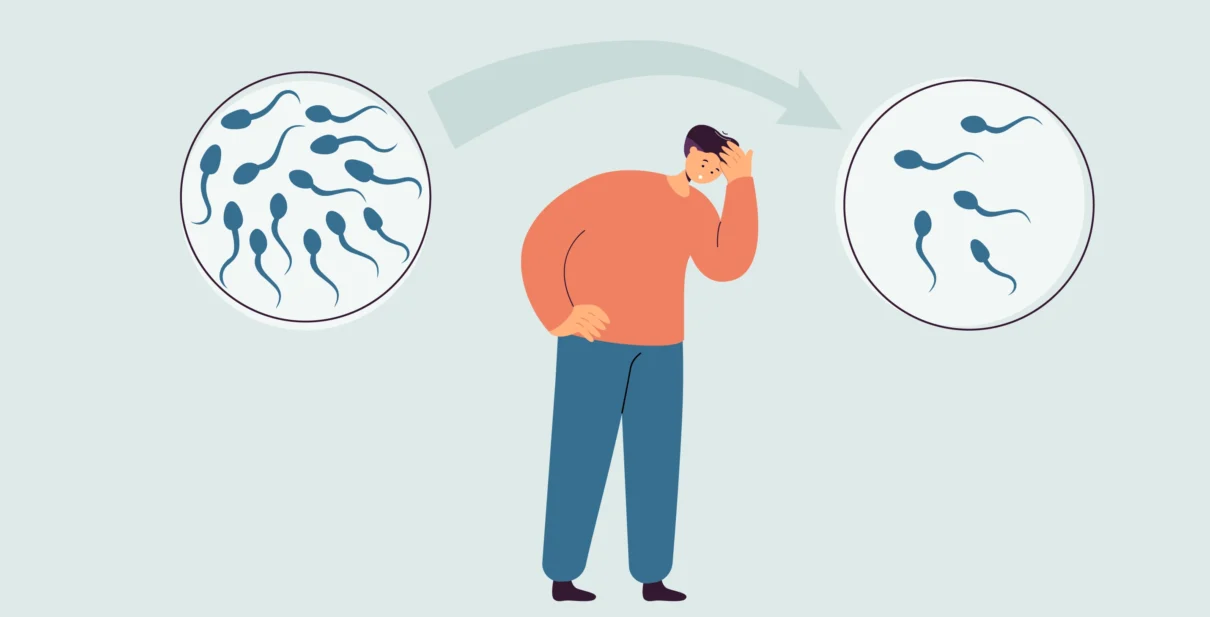
When a couple is unable to conceive, the initial assumption in most households is that the issue lies with the woman. This misplaced assumption costs precious time. The clinical reality: male factor infertility contributes to approximately 40–50% of all infertility cases.
If you are in Ahmedabad and have been trying to conceive for over a year without success, both partners require simultaneous evaluation. Male infertility in Ahmedabad sits squarely within the expertise of a urologist — specifically a urological andrologist with dedicated training in male reproductive medicine. At Dr. Hardik Yadav’s practice, male infertility evaluation and treatment is provided alongside the full spectrum of urological care.
Common Causes of Male Infertility
Sperm Production Disorders
Varicocele (15–20% of infertile men) Abnormal dilation of veins within the scrotum — raises testicular temperature and increases oxidative stress on developing sperm. The most common correctable cause of male infertility. Varicocelectomy reliably improves sperm parameters in 60–70% of men, with natural pregnancy rates of 30–40% within 12 months.
Hormonal disorders
- Hypogonadotropic hypogonadism — treatable with gonadotropin injections stimulating sperm production
- Hyperprolactinaemia — suppresses testosterone and FSH
Genetic causes
- Klinefelter syndrome (XXY) — primary testicular failure
- Y chromosome microdeletion — absent genes essential for spermatogenesis
- Genetic counselling required before ART
Sperm Delivery Disorders
Obstructive azoospermia (OA): Sperm produced normally but blocked. Causes: vasectomy, CBAVD, post-infectious epididymal obstruction, ejaculatory duct obstruction.
Non-obstructive azoospermia (NOA): Impaired testicular production. Causes: Klinefelter syndrome, Y chromosome microdeletion, varicocele, post-chemotherapy.
Ejaculatory Disorders
- Retrograde ejaculation — sperm enters bladder (common in diabetic men, after bladder neck surgery)
- Anejaculation — no ejaculation (spinal cord injury, medications)
Diagnosing Male Infertility in Ahmedabad: The Workup
Semen Analysis — The Starting Point
Performed after 2–5 days abstinence, in a laboratory, examined within 60 minutes.
WHO 2021 reference limits:
- Concentration: ≥16 million/mL
- Total motility: ≥42%
- Progressive motility: ≥30%
- Morphology: ≥4% normal forms
Two semen analyses 4–6 weeks apart before diagnosing a permanent abnormality.
Advanced Investigations
- Sperm DNA fragmentation index (DFI) — elevated DFI (>25%) associated with recurrent miscarriage and IVF failure
- Hormonal profile — FSH, LH, testosterone, prolactin, inhibin B
- Scrotal Doppler ultrasound — varicocele assessment, testicular volume
- Genetic testing — karyotype, Y chromosome microdeletion, CFTR mutation (for CBAVD)
- Post-ejaculate urine analysis — confirms retrograde ejaculation
Male Infertility Treatment in Ahmedabad
Medical Treatment
- Gonadotropin therapy — for hypogonadotropic hypogonadism
- Antioxidant therapy — CoQ10, vitamin C/E, carnitine — modest improvement in idiopathic cases
- Bromocriptine — for hyperprolactinaemia
Surgical Treatment
Varicocelectomy: Microsurgical subinguinal varicocelectomy — lowest recurrence, lowest hydrocele risk, highest sperm improvement rates.
Vasovasostomy / Vasoepididymostomy: Reversal of vasectomy or epididymal obstruction. Success rates depend on obstructive interval.
Surgical Sperm Retrieval for ICSI:
- PESA — percutaneous aspiration from epididymis; for obstructive azoospermia
- TESA — aspiration from testis
- Micro-TESE — open testicular surgery under microscope to identify tubules with active spermatogenesis in NOA; highest sperm retrieval rate
Lifestyle Modifications with Real Clinical Impact
- Stop smoking — reduces count, motility, increases DNA damage
- Reduce alcohol — impairs testosterone production
- Maintain healthy BMI — obesity reduces testosterone and sperm quality
- Avoid scrotal heat — laptops, tight underwear, hot baths
- Antioxidant supplementation — CoQ10 300 mg daily has best evidence
- Avoid anabolic steroids — most common iatrogenic cause of azoospermia in young men
For ED as a co-existing factor in male infertility: Erectile Dysfunction Doctor in Ahmedabad
For common urological conditions in men: Common Conditions and Modern Treatments for Urology in Ahmedabad
Conclusion: Expert Male Infertility Treatment in Ahmedabad at Dr. Hardik Yadav’s Practice
Male infertility in Ahmedabad is diagnosable, treatable, and in many cases correctable without assisted reproduction. At Dr. Hardik Yadav’s practice, every male infertility patient receives comprehensive workup — from semen analysis and hormonal profiling to genetic testing and surgical sperm retrieval — with treatment tailored to the underlying cause.
Your fertility deserves an accurate diagnosis. It starts with a conversation that too many men delay — and a specialist who addresses it with clinical clarity and patient respect.
Book Your Male Infertility Consultation with Dr. Hardik Yadav
Semen analysis. Hormone profile. Expert interpretation. Clear treatment plan.
Male Infertility Specialist — Ahmedabad
Male Infertility Specialist — Gota
Dr. Hardik Yadav — Urologist in Ahmedabad