

Twenty years ago, removing a large kidney stone required an open surgical incision across the flank — a week or more in hospital, significant blood loss, months of recovery. Today, the same stone can be managed through a puncture smaller than a pencil, or in many cases through natural body passages with no skin incision at all.
Endoscopic treatment for kidney stones in Ahmedabad at Dr. Hardik Yadav’s practice covers all modern techniques — from flexible ureteroscopy (RIRS) to mini-PCNL — performed with the latest laser technology and miniaturised equipment that reduces patient trauma while maximising stone-free outcomes.
What Does “Endoscopic” Mean in Kidney Stone Treatment?
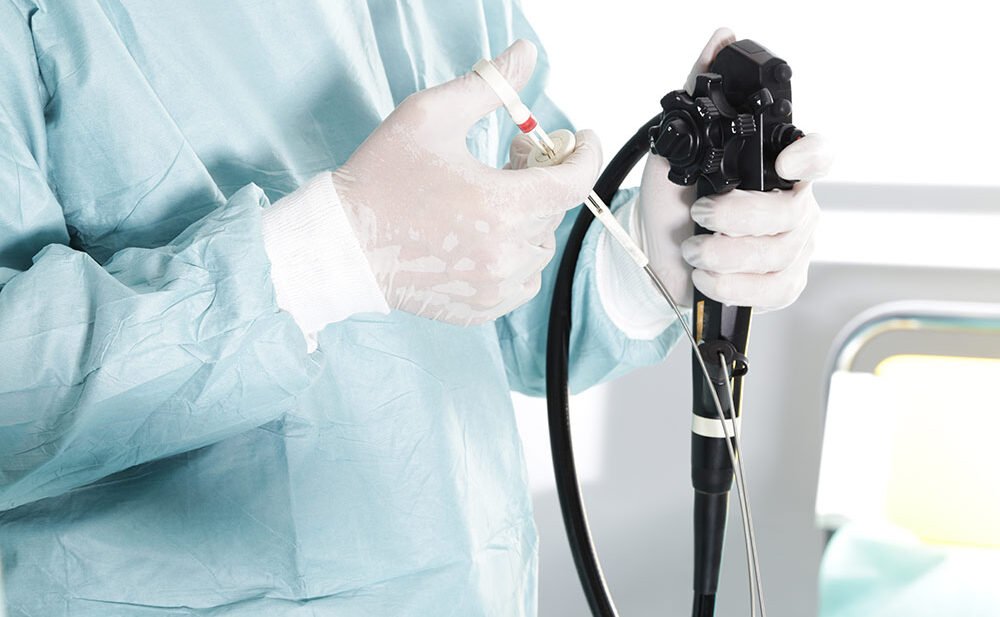
“Endoscopic” means a camera-equipped instrument (a scope) accesses the urinary tract through natural openings or a small puncture — without a large surgical incision. In urology, this means reaching the stone through the urethra, bladder, ureter, or a targeted skin puncture into the kidney.
Advantages over open surgery:
- No large incision — reduced blood loss, pain, and infection risk
- Hospital stay typically 1–2 nights (vs. 4–7 days for open)
- Return to normal activity in 1–2 weeks (vs. 4–6 weeks)
- High stone-free rates matching or exceeding open surgery
- Ability to treat complex stones in difficult locations
The Three Core Endoscopic Stone Procedures
1. Ureteroscopy (URS) — For Ureteric and Small Renal Stones
A rigid or semi-rigid ureteroscope (3–4 mm diameter) is passed through the urethra, bladder, and ureter — no skin incision of any kind.
Holmium:YAG or Thulium fibre laser fragments the stone. Stone-free rates exceed 95% for ureteric stones, 80–85% for renal stones under 15 mm.
2. RIRS (Retrograde Intrarenal Surgery) — For Kidney Stones 10–25 mm
A flexible ureteroscope — paper-thin, deflecting 270° — advances all the way into the kidney through the same natural pathway. No skin puncture.
Inside the kidney, the flexible scope reaches stones in all calyces. Stone-free rates: 85–92% for stones 10–20 mm.
Why RIRS is transformative:
- Treats kidney stones up to 25 mm without any skin incision
- Superior for lower-pole stones, horseshoe kidneys, transplant kidneys
- Most patients discharged same day or next morning
3. PCNL (Percutaneous Nephrolithotomy) — For Large and Complex Stones
A small puncture (1 cm or smaller in mini-PCNL) in the back provides direct kidney access. A nephroscope inserted directly into the kidney fragments and removes large stones.
Mini-PCNL (14–20 Fr): Smaller tract, less bleeding, faster recovery, comparable stone-free rates up to 35 mm stones.
Stone-free rates: 85–95% for large stones in a single session.
Selecting the Right Procedure
| Stone Characteristics | Recommended Approach |
| Ureteric stone (any size) | Ureteroscopy (URS) with laser |
| Renal stone under 10 mm | RIRS or observation |
| Renal stone 10–20 mm | RIRS (first choice) |
| Renal stone 20–35 mm | RIRS (experienced centres) or Mini-PCNL |
| Renal stone over 35 mm / staghorn | PCNL |
| Lower-pole stone | RIRS preferred over ESWL |
| Multiple calyceal stones | PCNL or staged RIRS |
For how technology drives these outcomes: Reimagining Urology in Ahmedabad
What to Expect on Surgery Day
Pre-operative: Urine culture to exclude infection. Blood tests: CBC, creatinine, coagulation. Stop blood thinners as directed. CT KUB reviewed for stone mapping.
Day of procedure:
- Spinal or general anaesthesia
- Duration: 30 minutes (simple ureteroscopy) to 90 minutes (complex PCNL)
- Discharge: Same day (URS, RIRS) or next morning (PCNL)
Post-procedure:
- JJ stent in situ for 2–4 weeks (URS, RIRS)
- Nephrostomy tube 24–48 hours (PCNL), then removed
- CT or X-ray KUB at 4 weeks to confirm stone clearance
For why stones form: Kidney Stones — Why They Hurt and What Your Urologist Can Do
For laparoscopic stone removal (rare cases): Laparoscopic Urologist Doctor in Ahmedabad
Conclusion: Best Hospital for Endoscopic Kidney Stone Treatment in Ahmedabad
The era of open kidney stone surgery is over for the vast majority of patients. Endoscopic treatment for kidney stones in Ahmedabad at Dr. Hardik Yadav’s practice provides the complete range — RIRS, ureteroscopy, mini-PCNL, and PCNL — with the latest laser technology and the training to achieve high stone-free rates with minimal patient discomfort.
Your stone has a treatment. And it doesn’t require a large cut.
Book Your Endoscopic Stone Evaluation — Dr. Hardik Yadav
Stone-free outcomes without open surgery. Same-week evaluations.
Kidney Stone Treatment — Ahmedabad
Dr. Hardik Yadav | Best Urologist in Ahmedabad