
Getting up three times a night to pass urine, a weak stream, or a feeling that the bladder never quite empties: these are the classic signs of an enlarged prostate, known as benign prostatic hyperplasia (BPH). It affects most men as they get older, and it is very treatable. This guide explains when tablets are enough, when prostate surgery in Ahmedabad is the better choice, how TURP compares with laser surgery, and what you can expect to pay.
| Quick facts BPH is not cancer and does not turn into cancer, although both can exist together. Many men improve with tablets alone. Surgery is advised when tablets fail or complications appear. Indicative cost of BPH surgery in a private hospital in Ahmedabad: about ₹60,000 to ₹1.5 lakh, depending on the technique. |
What Is an Enlarged Prostate?
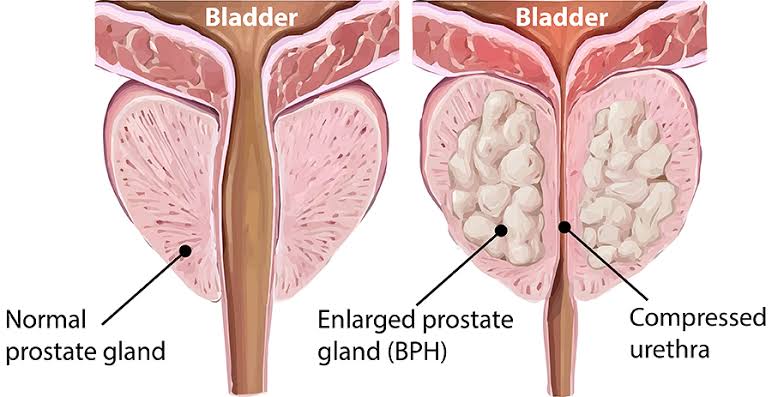
The prostate is a walnut-sized gland that sits below the bladder and wraps around the urethra, the tube that carries urine out. It slowly grows with age. By 60, around half of men have an enlarged prostate, and the proportion keeps rising after that. As the gland grows, it squeezes the urethra and the bladder has to work harder.
Common symptoms
- Passing urine often, especially at night (nocturia).
- A weak or interrupted stream, or waiting for the flow to start.
- A sudden, urgent need to pass urine.
- Dribbling at the end, or a feeling of incomplete emptying.
BPH or prostate cancer?
Early prostate cancer usually causes no urinary symptoms at all, so symptoms alone cannot tell the two apart. A PSA blood test can rise in both conditions. If your PSA is raised, your urologist will explain whether further tests are needed. Read more on prostate cancer treatment in Ahmedabad and our guide to understanding prostate cancer.
Tests Before Prostate Surgery in Ahmedabad
Before recommending any treatment, a urologist will usually check:
- a symptom score questionnaire (IPSS) to measure how much the symptoms bother you;
- a urine test to rule out infection or blood;
- a PSA blood test and kidney function (creatinine);
- an ultrasound to measure prostate size and the urine left in the bladder after voiding;
- uroflowmetry, a simple test in which you pass urine into a machine that measures the flow.
Our guide to common urology tests explains each of these in more detail.
Treatment Without Surgery
Lifestyle changes
Drinking less in the two hours before bed, cutting down on tea, coffee and alcohol in the evening, and “double voiding” (passing urine, waiting a minute, then trying again) help many men with mild symptoms. Some cold and allergy medicines make symptoms worse, so tell your doctor what you take.
Keeping a simple bladder diary for three days, noting when and how much you drink and pass, helps your urologist judge whether night-time urination comes from the prostate or simply from drinking late in the evening.
Medicines
Alpha-blockers such as tamsulosin or silodosin relax the muscle in the prostate and often improve the flow within days. They can cause dizziness and reduce the amount of semen. 5-alpha-reductase inhibitors such as finasteride or dutasteride shrink larger prostates over six to twelve months and lower the risk of urine blockage. The two are often combined for larger glands. Men who also have erection problems may benefit from tadalafil, which helps both; see our page on erectile dysfunction treatment. Do not stop these medicines without advice.
When Is Prostate Surgery Needed?
Surgery is usually recommended when:
- symptoms remain troublesome despite tablets, or the side effects are not acceptable;
- you have had an episode of being unable to pass urine (retention) and needed a catheter;
- you have repeated urine infections or bladder stones;
- the prostate bleeds repeatedly;
- back-pressure is affecting your kidneys, or a large amount of urine stays in the bladder.
Delaying surgery once these problems appear can permanently weaken the bladder muscle, so it is worth discussing timing early rather than waiting for an emergency.
TURP vs Prostate Laser Surgery in Ahmedabad
Both operations are done through the urinary passage, so there is no cut on the skin.
TURP (transurethral resection of the prostate)
An electric loop shaves away the inner part of the prostate in small pieces. TURP has been the standard operation for decades and works very well for small and moderate-sized glands.
HoLEP (holmium laser enucleation of the prostate)
Prostate laser surgery in Ahmedabad most often means HoLEP. The laser separates the whole enlarged inner part from its outer capsule in one piece, which is then removed. It works for prostates of any size, including very large ones, and usually causes less bleeding.
| Feature | TURP | Laser (HoLEP) |
| Prostate size | Small to moderate | Any size, including very large |
| Bleeding | Low to moderate | Lower |
| Catheter after surgery | Usually 1–3 days | Usually 1–2 days |
| Hospital stay | 2–3 days | 1–2 days |
| Need for repeat surgery | Possible after some years | Uncommon |
| Indicative cost (₹) | 60,000 – 1,10,000 | 90,000 – 1,50,000 |
Is BPH surgery the same as prostate removal?
No. Many men searching for prostate removal in Ahmedabad worry that the whole gland will be taken out. In BPH surgery, only the inner part that blocks the urine passage is removed and the outer prostate stays. Removing the entire prostate (radical prostatectomy) is an operation for prostate cancer, usually performed by laparoscopic urology or robotic surgery.
Prostate Surgery Cost in Ahmedabad
The overall prostate surgery cost in Ahmedabad at a private hospital is typically about ₹60,000 to ₹1.5 lakh. The prostate operation cost in Ahmedabad you are quoted will depend on the technique, the size of your prostate, your room category and length of stay, and other health conditions such as diabetes or heart disease. Pre-operative tests (ECG, echocardiogram, ultrasound, PSA) and, if needed, a biopsy are usually billed separately.
BPH surgery is covered by most health insurance policies, often after a waiting period of up to two years. Cashless treatment is available at Excel Hospital, Gota, for most insurers. Ask for a written estimate before admission.
Recovery After Prostate Surgery
- Mild burning and blood-tinged urine are common for two to four weeks.
- Drink two to three litres of water a day unless told otherwise.
- Avoid heavy lifting, straining, cycling and intercourse for about four weeks.
- Most men return to light work within one to two weeks.
- Most men notice a “dry” orgasm afterwards, as semen flows back into the bladder. This is harmless, but discuss it first if you still plan to have children.
- Any leakage is usually temporary; pelvic floor exercises help.
What to Expect with Prostate Surgery in Ahmedabad at Excel Hospital, Gota
If you choose prostate surgery in Ahmedabad with Dr. Hardik Yadav, the usual journey is simple. After your consultation and tests, you are checked by the anaesthetist and, if needed, a physician or cardiologist. You are admitted on the morning of surgery, and the operation is done under spinal anaesthesia in most cases. A catheter drains the bladder for one to three days and is removed before or soon after discharge, once you pass urine comfortably. You return for a review at about six weeks, when a repeat flow test shows how much the stream has improved.
| Seek urgent care if You cannot pass urine at all and your lower abdomen is painful and swollen.There is heavy bleeding with clots, or you develop a fever. |
Frequently Asked Questions
Does an enlarged prostate turn into cancer?
No. BPH and prostate cancer are separate conditions, though a man can have both. That is why PSA testing and examination still matter.
Will prostate surgery affect my erections?
For most men, erections are not significantly affected. Changes in ejaculation are common and should be discussed before surgery.
Is laser surgery always better than TURP?
Not always. Both give good results. The right choice depends on prostate size, your health and your preferences.
How long do the results last?
For most men, the improvement after TURP lasts many years, and repeat surgery after HoLEP is uncommon because the whole enlarged part is removed. Annual check-ups with PSA are still recommended.
Book a Consultation
If you are over 40 and have urinary symptoms, our article on health issues for men over 40 is a useful next read. To be examined by a urologist in Gota, see the urologist in Gota clinic page for OPD timings.