

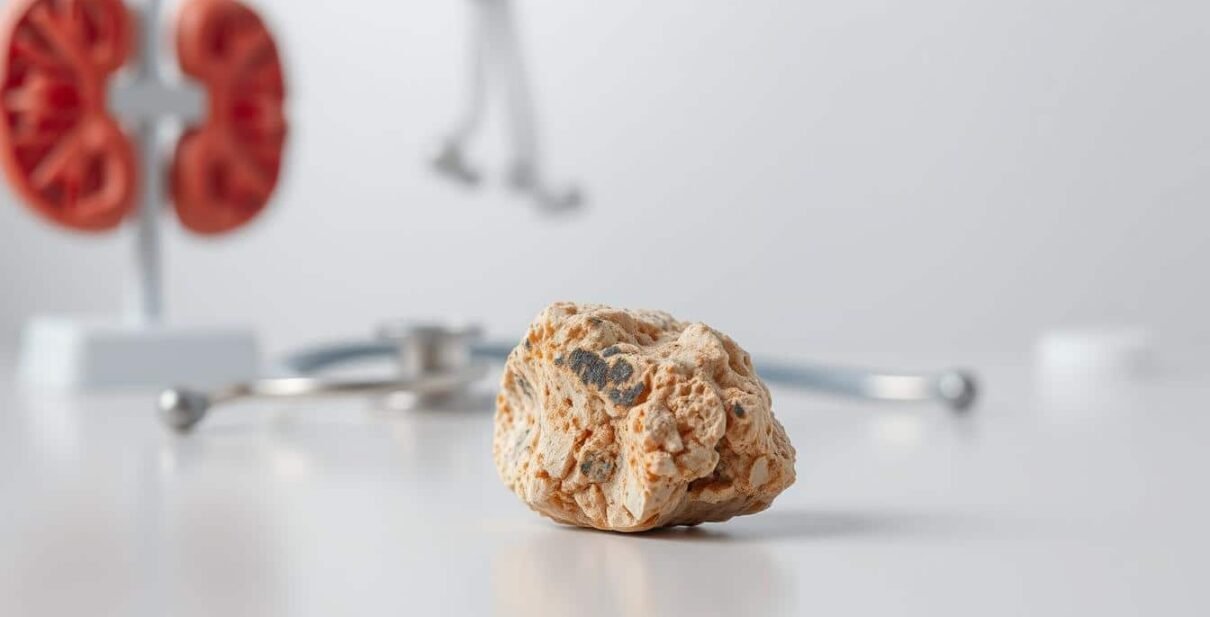
The pain starts suddenly — cramping, colicky waves beginning in the flank and radiating to the groin or genitals. It comes in waves, makes you restless, and is often accompanied by nausea and an urgent need to urinate. If this sounds familiar, a ureteric stone is very likely the cause.
Ureteric stone treatment in Ahmedabad requires a urologist who understands that not every stone requires immediate surgery — but also knows when watchful waiting becomes dangerous. At Dr. Hardik Yadav’s urology practice, precise evaluation and evidence-based management ensure every patient gets the right treatment at the right time.
What Is a Ureteric Stone — and How Is It Different from a Kidney Stone?
A ureteric stone is a kidney stone that has migrated into the ureter — the narrow muscular tube (3–4 mm at its narrowest) connecting each kidney to the bladder. The ureter has no capacity for dilation, so the stone triggers intense ureteric spasm — causing that characteristic severe pain.
Three anatomical points where stones most commonly lodge:
- Pelvi-ureteric junction (PUJ) — where the kidney drains into the ureter
- Crossing of the iliac vessels — where the ureter passes over the pelvic brim
- Vesico-ureteric junction (VUJ) — where ureter enters the bladder (narrowest point)
Can a Ureteric Stone Pass on Its Own?
| Stone Size | Spontaneous Passage Rate | Typical Timeframe |
| Under 4 mm | 85–90% | 1–2 weeks |
| 4–6 mm | 50–60% | 2–4 weeks |
| 6–8 mm | 25–35% | May need intervention |
| Over 8 mm | Less than 10% | Intervention usually recommended |
Medical Expulsive Therapy (MET): Alpha-blockers (tamsulosin) relax ureteric smooth muscle, facilitating stone passage and reducing pain. Standard first-line management for stones under 6–8 mm expected to pass.
Warning Signs Requiring Urgent Intervention
Do not wait if any of the following are present — see the best urologist in Ahmedabad immediately:
- Fever with ureteric colic — infected obstructed kidney is life-threatening
- Single kidney with ureteric obstruction — causes acute kidney failure rapidly
- Bilateral ureteric stones — both kidneys at risk
- Uncontrolled pain — not responding to standard analgesia
- Stone not passing after 4 weeks of expectant management
- Progressive hydronephrosis — kidney swelling increasing on serial ultrasounds
- High-grade obstruction — significant urine flow impairment
For the full warning sign list: 10 Warning Signs You Need to Visit the Best Urologist in Ahmedabad
Diagnosing a Ureteric Stone
CT KUB (non-contrast) — gold standard. Identifies exact location, size, density (Hounsfield units predict ESWL response), and degree of upstream obstruction with near-100% sensitivity.
Ultrasound — first-line in emergency settings. Identifies hydronephrosis reliably but may miss stones under 3–5 mm in the mid-ureter.
X-ray KUB — identifies radio-opaque calcium stones; misses uric acid stones. Used for follow-up monitoring.
Urine analysis — identifies haematuria in 80–90% of ureteric colic cases.
Ureteric Stone Treatment Options in Ahmedabad
Conservative Management + MET
For small stones with high spontaneous passage probability, no infection, no obstruction, controlled pain. NSAIDs and antispasmodics manage pain.
Ureteroscopy (URS) with Laser Lithotripsy — Gold Standard
A rigid or semi-rigid ureteroscope is passed through the urethra and bladder into the ureter. Holmium:YAG or Thulium fibre laser fragments the stone. JJ stent placed for 2–4 weeks.
Why preferred:
- Accesses stones at any ureteric location
- Stone-free rates exceed 95% for distal, 85–90% for proximal stones
- Day-care or overnight procedure
Full kidney stone treatment details: Kidney Stone Treatment in Ahmedabad
ESWL for Ureteric Stones
Lower stone-free rates for ureteric stones than renal stones; not effective for mid-ureteric stones. Largely replaced by ureteroscopy in leading centres.
Ureteric Stenting (JJ Stent)
When definitive treatment must be delayed (pregnant patient, infected obstructed kidney before definitive procedure). Temporising measure only — does not treat the stone itself.
Laparoscopic Ureterolithotomy
For very large impacted proximal ureteric stones that cannot be managed endoscopically. For laparoscopic expertise: Laparoscopic Urologist Doctor in Ahmedabad
Preventing Recurrence After Ureteric Stone Treatment
Without addressing the metabolic cause, recurrence rates are 50% within 5 years. Dr. Hardik Yadav recommends:
- Stone analysis — identifies composition and guides dietary advice
- 24-hour urine collection — identifies metabolic abnormalities
- Fluid intake — 2–2.5 litres urine output daily is the single most effective prevention
- Dietary modification — based on stone type
- Medications — potassium citrate, thiazide diuretics, allopurinol for specific types
For treatment options overview: Professional Treatments in Kidney Stone Treatment in Ahmedabad
For understanding why stones form: Kidney Stones — Why They Hurt and What Your Urologist Can Do
Conclusion: Expert Ureteric Stone Treatment in Ahmedabad
Ureteric colic is one of the most acutely painful experiences in medicine — but with the right management, most patients achieve stone clearance quickly. Whether you need conservative MET, urgent drainage for an infected kidney, or definitive ureteroscopic laser treatment — Dr. Hardik Yadav provides the full spectrum of ureteric stone treatment in Ahmedabad with clinical expertise ensuring the right decision for your specific stone.
Ureteric Stone Emergency or Consultation — Dr. Hardik Yadav
For urgent ureteric colic — do not delay. Routine evaluation — same-week appointments.
Kidney Stone Treatment — Ahmedabad
Dr. Hardik Yadav — Urology Hospital in Ahmedabad Fast relief. Precise treatment. Lasting stone-free outcomes.